
________________________________________________________________________
________________________________________________________________________
Elephants once roamed the African savannah in their thousands forming vast herds which followed the seasonal migrations. Beginning in the 16th century, they were hunted commercially for their ivory. Their slaughter culminated in the 1980s when their number had been reduced by almost half. Since then, active legislation and a worldwide ivory ban has resulted in a stabilization and increase in the Elephant population in countries with sound conservation policies.
Today the largest problem facing the Elephant is its large appetite and the shortage of habitat mostly due to human encroachment. They are continual feeders, resting during the heat of the day and are destructive to their habitat if confined to certain areas, often destroying hundreds of trees only to browse a few leaves off one branch. Their impact extends to the destruction of the habitat of other species as well thus creating a serious dilemma for conservation.
Elephants live in herds, with a matriarch as the leader. Older bulls break away from the herd and often form small bachelor groups, with younger bulls acting as “askari” for the older males. They travel great distances in search of food, and often follow a seasonal route covering hundreds of miles. They have to drink water every day, often chasing other game away in times of drought although they are often the first to dig for water in dry riverbeds creating pools for other species.
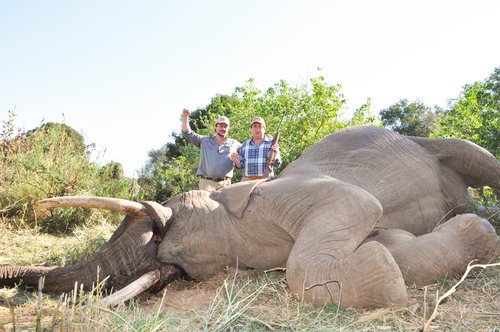
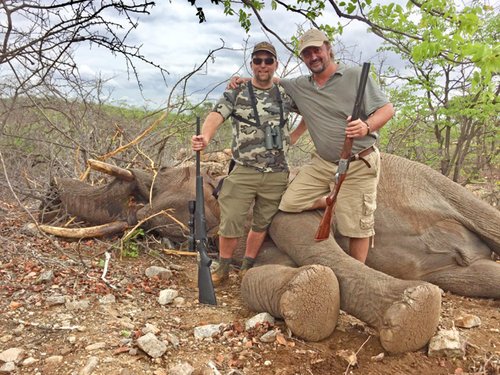
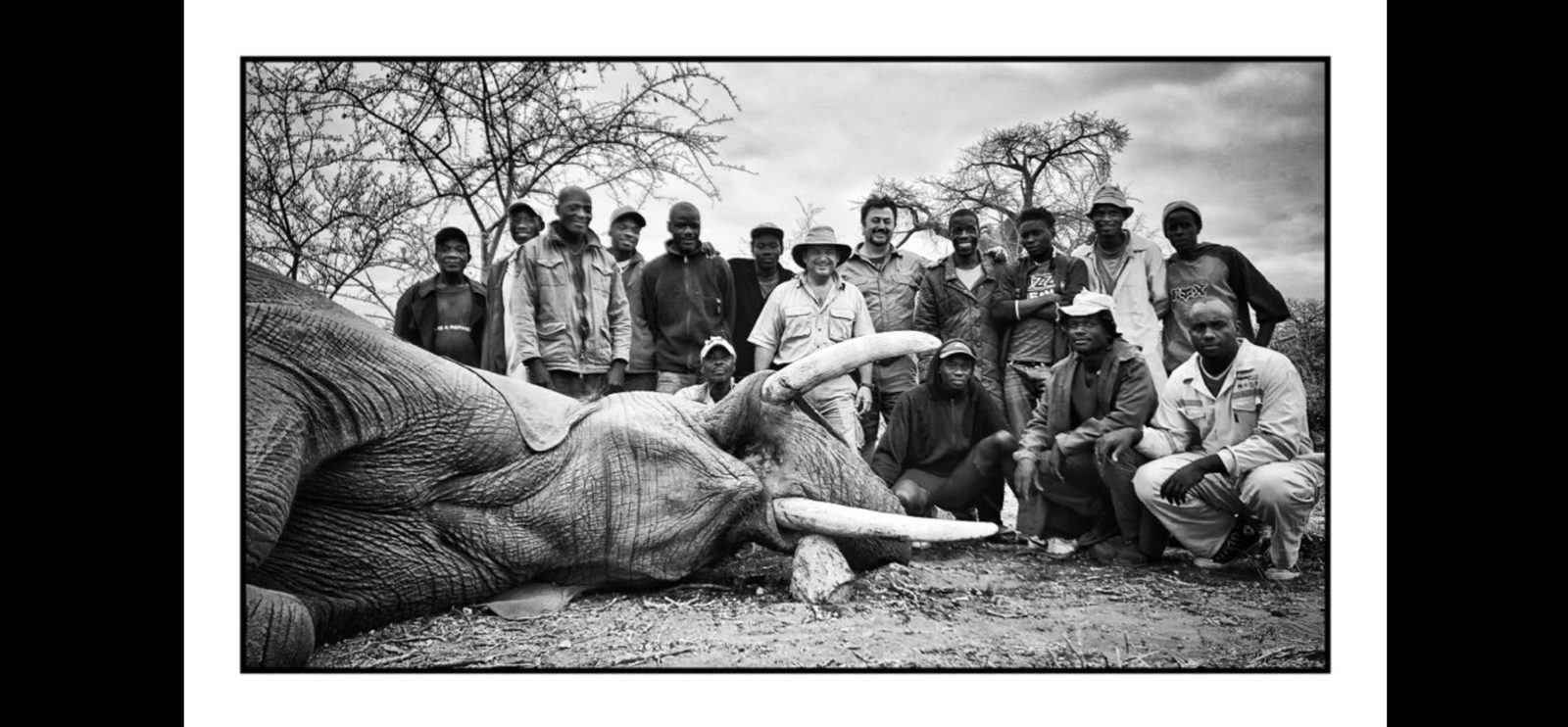
Elephant hunting is done mostly on foot by following promising fresh spoor until the animal is sighted. It is then determined if the tusks are of satisfactory trophy size. Usually this type of hunting involves hours of walking only to be disappointed by a large bodied small tusked bull.
Generally older larger bulls will have younger, more alert bulls in attendance and they often raise the alarm or cause problems by always seeming to be in the way of the path to the larger bull. In most cases, an Elephant hunt is a psychological battle of endurance, patience and persistence with many blisters, sunburn and exhaustion.
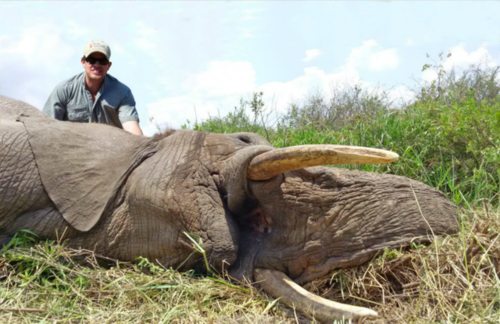
The shooting part of the hunt is fairly quick, usually a brain shot is recommended at close quarters with heavy grain solids from a large bore caliber. When facing the Elephant a frontal brain shot is aimed at the third or fourth wrinkle below the center of the eyes. With a side shot, aim for the area between the eye and the ear hole or directly in front of the ear hole where the hairy knob juts out. A heart shot is a better bet when it is difficult to get in close to the elephant, placed lower down, directly behind the shoulder.
The minimum is the .375 Magnum which is a legal requirement in many countries. Most hunters prefer something heavier starting from .416 or .458 Magnum upwards with heavier double rifles being the best choice.
African Elephants are listed both under Appendix I and II of CITES depending in which part of the continent they occur. At times their listing is rather confusing and is concerned more with actual commercial ivory sales (from legal culls) than with hunting trophies.www.cites.org.
More information can be found at the US fish and wildlife website (www.fws.gov) or at the SCI Washington DC website (www.sci-dc.org)
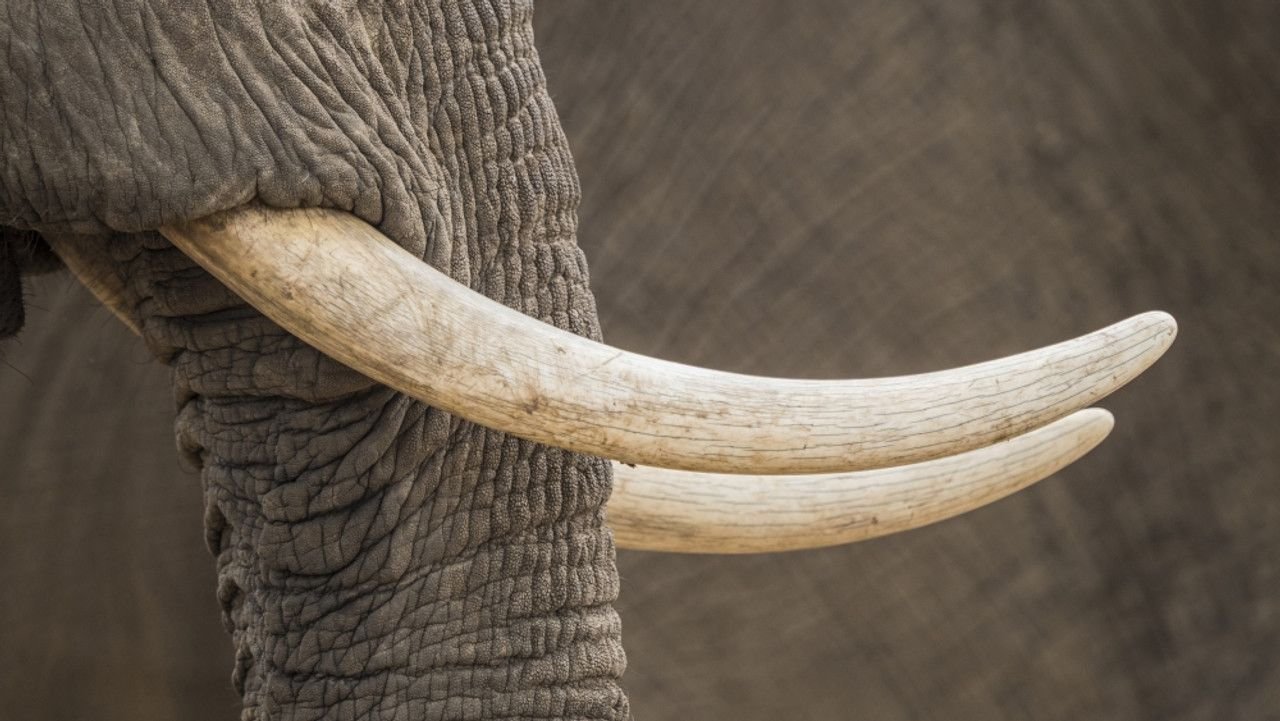
Score is taken from the weight of both tusks and they do vary quite considerable. It is not often that a good bull carries evenly matched ivory. Usually older bulls will wear down their favorite tusk digging and stripping bark, much in the same way we are either left or right handed.
A good set of tusks must protrude from the skin flap for at least a meter, usually much more depending upon the thickness. Remember a considerable portion of the tusk is hidden in the skin and skull bone, probably at least a third. The thickest part of the tusk is usually at the lip.
Which country is best suited for your Elephant hunt?
- What can I afford to spend on my elephant hunt?
- What do I want out of my elephant hunt? What combination of hunt?
- Is it the experience or the quality of trophy that matters most?
- Will I be hunting other plains or dangerous game while I am on my lion elephant?
- Am I going alone or will there be others joining me on my hunting experience? What expectations do they have?
The golden rule to hunt big tuskers is to book well in advance!
________________________________________________________________________
________________________________________________________________________
________________________________________________________________________