
________________________________________________________________________
________________________________________________________________________
________________________________________________________________________
________________________________________________________________________
- Size: Shoulder height 30 inches, male weigh around 150 to 180 lbs. Size can vary depending on the area. Females are typically 20% – 40% smaller than males.
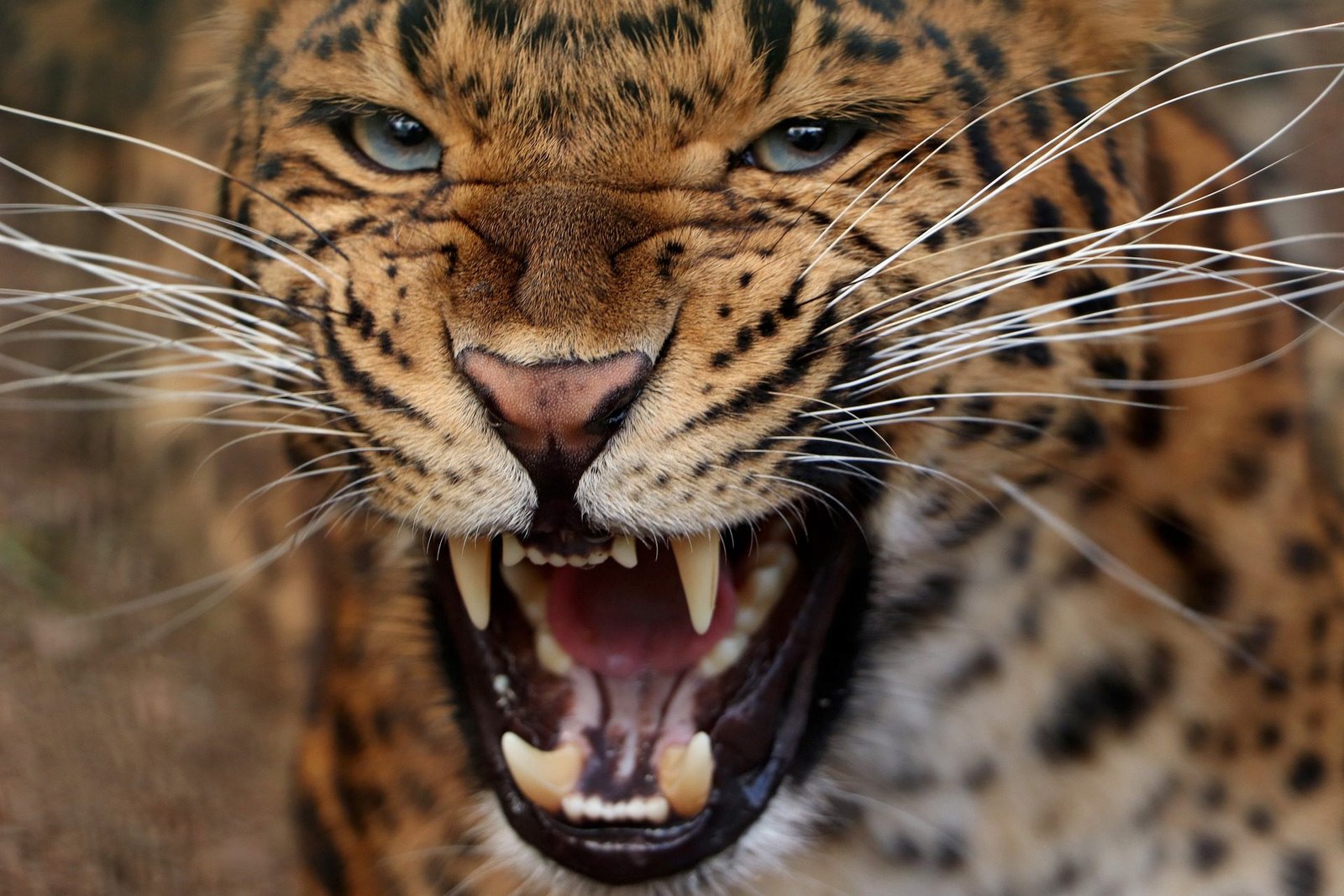
- Color: Ground colour is off-white to golden, with black spots on the legs, shoulders, head and hindquarters, and irregular, light-centered ‘rosettes’ scattered profusely over the back and sides.
- Potential Longevity: 21 years (5- 10 years shorter in the wild)
- Most Like: Leopards are most like the Cheetah, but the leopard is heavily built and has no tear marks from corner of eye to corner of mouth. The leopard’s main body markings are rosettes and not solid spots like those of the cheetah.
- Diet: They have a number of prey items, including gazelles, antelopes, monkeys, jackals, duiker, eland, impala, insects, wildebeest, rodents, hares, peacocks, snakes, sheep and goats. Leopards can live independently of water for long periods of time, obtaining liquid from their prey.
- Reproduction and Gestation Period: The Leopards gestation period is between 90 – 100 days (3 months).
Leopards are thought to date back as far as 2 million years which is testament to their perfected ability to adapt in all aspects. They are the perfect predator, opportunistic hunters and incredibly strong for their size. In the heart of a leopard lies the knowledge and instinct of its inner strength, which are not often exhibited – unless wounded or cornered. If not hurt or wounded, a leopard almost always prefer flight over fight.
Leopards are usually solitary, holding and protecting a large territory which is roamed in its entirety on a regular basis. They are extremely cautious with excellent senses and camouflage. The perception that leopard are few is testament to this fact. Males are larger bodied with a broader head and generally a darker, yellowish-orange tinge to their coats, especially along the top of their back.
They are largely nocturnal and hunt a wide variety of prey from medium-sized antelope down to frogs and mice. They are extremely adaptive and are able to live in a variety of terrain, making them widespread throughout Africa. Leopard are not really known as man-eaters although there are cases in Africa and India where these cats have turned into impressive human predators – the “Leopard of Panar” which was shot by that most famous of cat hunters, Jim Corbett, killed over 400 people.
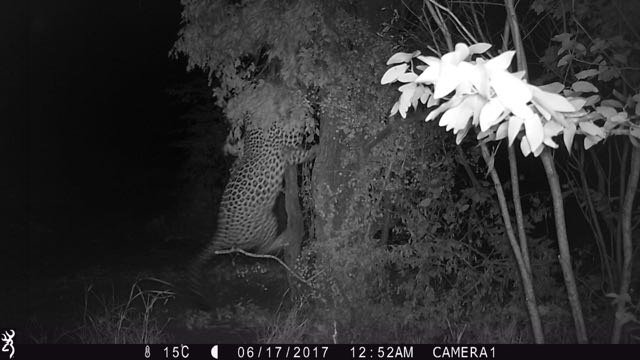
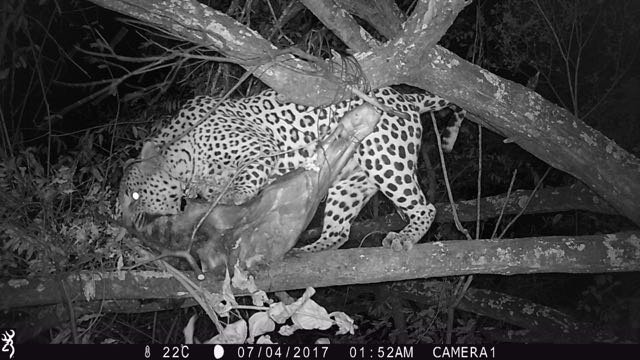
Leopards have a very wide range of habitat tolerance, from rainforest to semi-desert, including savannah, mountainous areas and rocky hills. Leopards naturally occur in most parts of the African subcontinent and many parts of Asia. Leopards lead a solitary lifestyle. Males inhabit territories of 5 to 40 square km, which may overlap with the territories of several females. They are very defensive of their territory and urinate around the boundaries of their territories to warn off intruders. They are most active between sunset and sunrise. Leopards often take their kills up into the safety of tree branches, to avoid the attention of hyenas and lions. They are incredibly strong and are capable of lifting carcasses three times their own body weight, placing them on branches over 6m high. There have been several reports of leopards hauling young giraffes into trees.
If not hurt or wounded, a leopard almost always prefer flight over fight. Leopards are usually solitary, holding and protecting a large territory which is roamed in its entirety on a regular basis.
They are extremely cautious with excellent senses and camouflage. The perception that leopard are few is testament to this fact. Males are larger bodied with a broader head and generally a darker, yellowish-orange tinge to their coats.
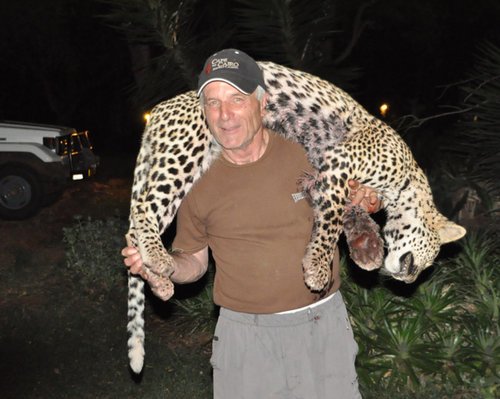
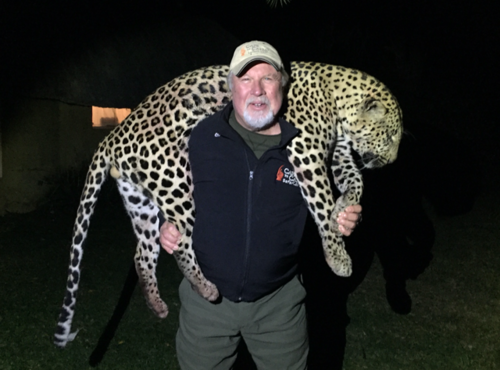
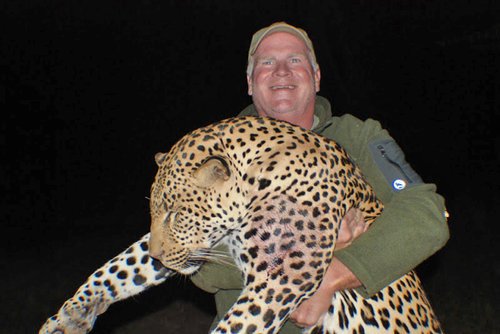
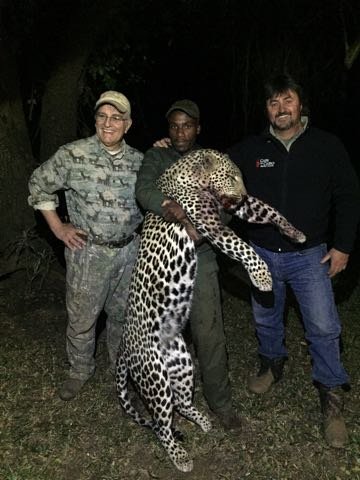
Due to their secretive nature it would be very difficult to successfully hunt leopard on a 14 day safari without baiting or dogs.
Baiting is the most common method due to lower cost and due to more permits available. Hunter and PH will wait in a blind, normally at dusk , 50 or more yards away. Quality optics with strong light gathering capabilities is necessary. Take note of how the leopard is sitting on the bait and listen to your PH’s advice as to where to aim for. The older hunters believe : “If you can hear the cat hit the ground, it has been shot well “. The most common mistake is to miscalculate the angle of the shot as you are shooting up into a tree and usually you need to aim slightly lower.
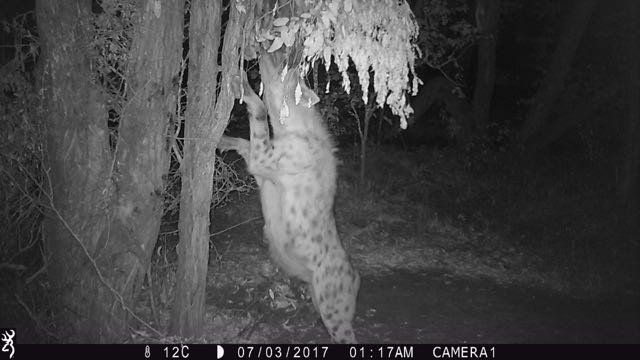
Leopard frequently walks through easy corridors, such as riverbeds and roads. Thick cover or rocky outcroppings provide them with secure daytime hangouts and good ambushing points for hunting. Due to the animals reclusive nature successful leopard hunters will book a minimum of 14 days on the ground in the hunting area. Available meat “bait” is strategically secured to a climbable tree in an area the leopard frequents. The scent of guts and stomach contents, along with blood and decaying flesh attract the cat to the bait. The bait is typically in the dense area or thicket, close to the leopards favourite travel routes. The dense bush helps the cat to feel secure and encourages him to feed in daylight hours.
________________________________________________________________________
________________________________________________________________________
________________________________________________________________________
________________________________________________________________________
________________________________________________________________________